
*This post may contain affiliate links for which I earn commissions at no additional cost to you.*
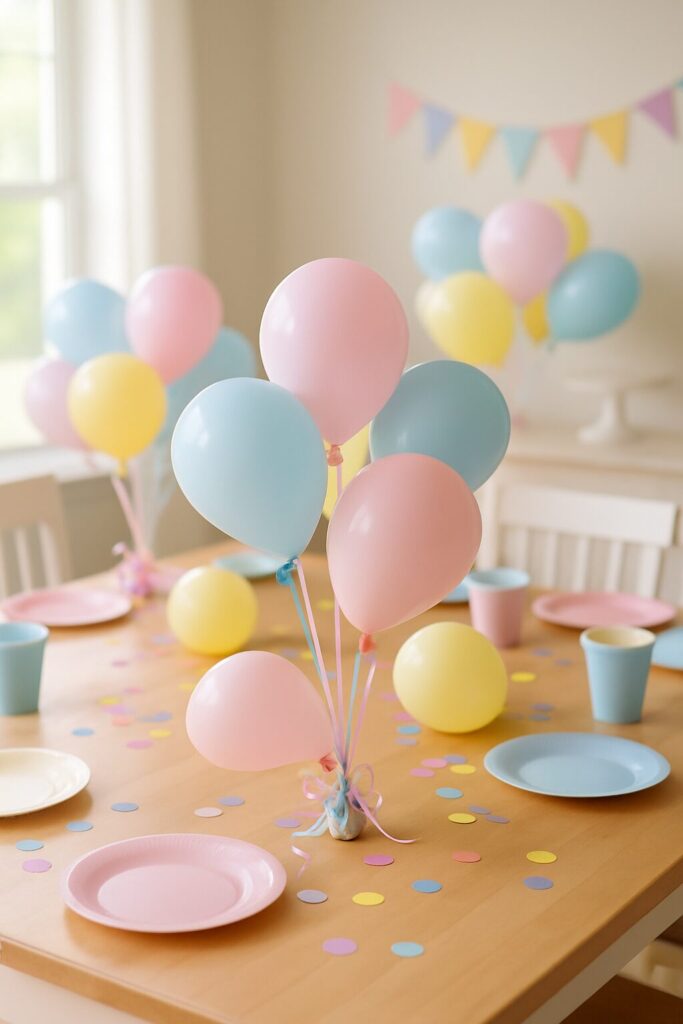
If you’ve ever set up a table full of cheerful little balloon centerpieces, stepped back to admire your work, and then returned an hour later to find them looking… tired, you’re not alone. I used to think I’d tied something wrong or bought a “bad batch” of balloons.
The truth is much simpler, and thankfully, kinder to your decorating confidence. Once you understand why balloons slowly sink, you can actually plan around it so your party doesn’t sag before the guests even arrive.
So let’s lift the mystery. Your centerpieces really are trying their best, and with a few little tweaks, they can stay perky through the whole event.
Understanding What Balloons Are Made Of
Latex balloons look smooth and shiny on the outside, but up close they behave a lot like a stretchy sponge. A very pretty sponge, but still a sponge.
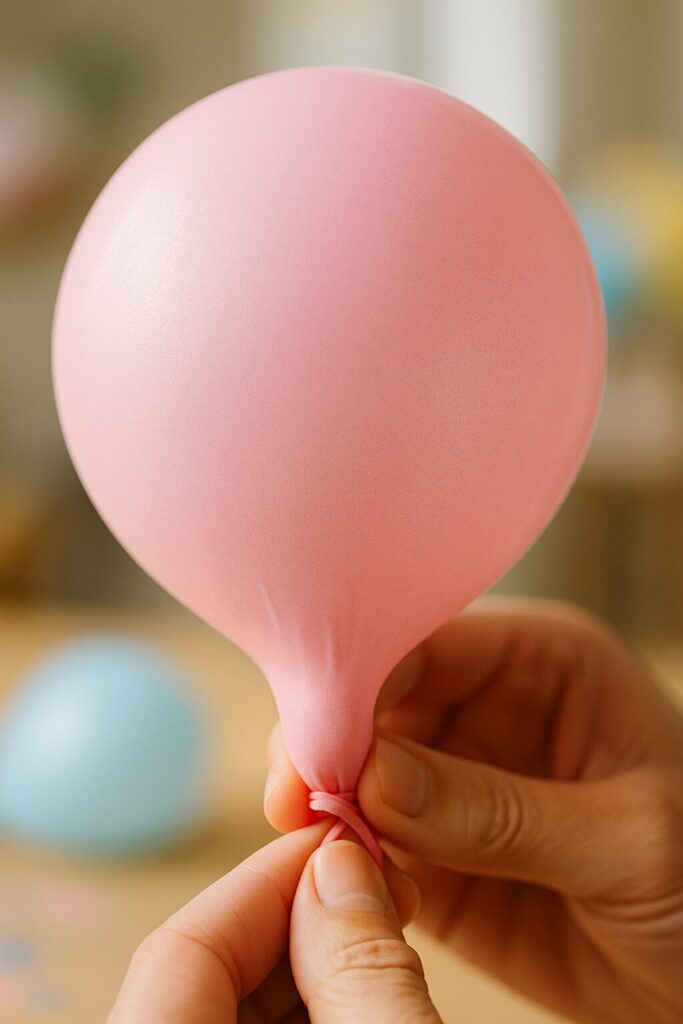
When you inflate a latex balloon, those tiny pores naturally expand. Air molecules start slipping out almost immediately, only a little at a time, but as hours pass you start to see the balloon soften and settle lower into the design. This is why a balloon that looked perfect on your kitchen counter at 8 a.m. can look like it wants a nap by lunchtime.
Quick Summary:
Latex has microscopic pores that slowly release air.
What’s Really Happening:
Imagine pulling apart a cotton T-shirt. When you stretch it, the weave opens. Latex behaves similarly. Once the balloon is inflated, air begins finding its way out through those tiny openings. Helium escapes even faster because the particles are smaller, but regular air can still slip out steadily over several hours.
You’ll notice this most with balloons that hold up another balloon or design element. The moment the bottom balloon loses even a little air, the whole structure settles downward.
What You Can Do:
If your event is more than a couple of hours long, inflate your centerpiece balloons as close to event time as possible. When I need them to last longer, I double-stuff the balloons (one balloon inside another), which slows the air loss dramatically.
Avoid These Common Mistakes:
- Using older balloons that have been sitting in a warm closet for months. The latex becomes brittle and porous.
- Under-inflating. Soft balloons start sinking sooner because the latex is never fully stretched to begin with.
How Temperature Plays a Big Role
If the first section felt a little scientific, don’t worry. This part is as simple as thinking about a cold car in the morning.
Warm air expands. Cool air contracts. Balloons respond to the temperature around them just like that. So if you inflate your centerpieces in a warm house but your party is outside in cooler air, they’ll shrink and sink noticeably during the first hour.
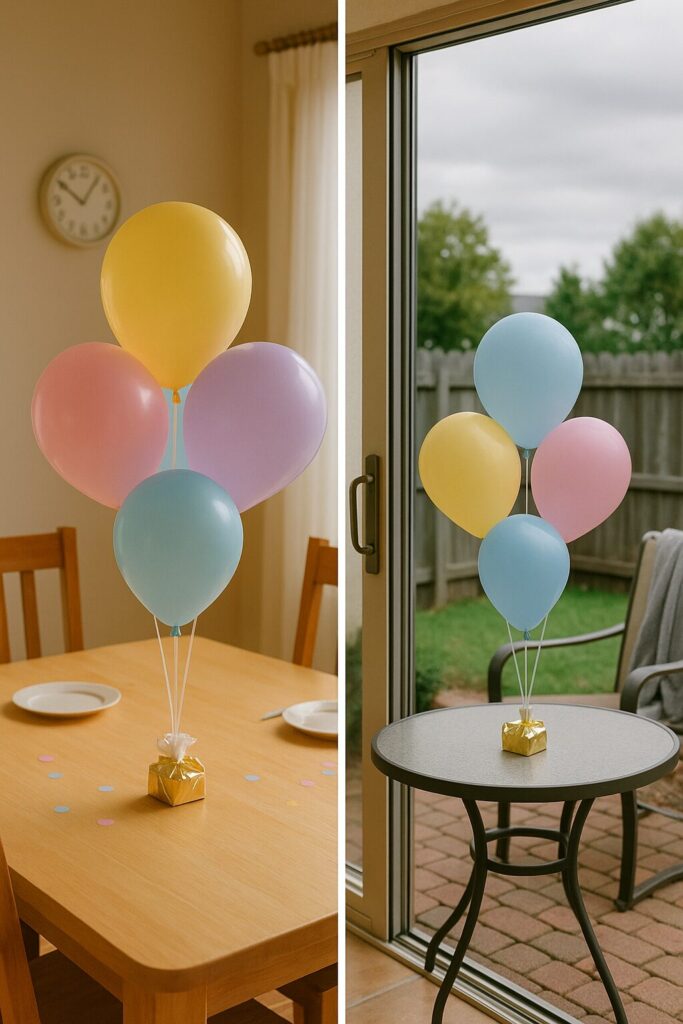
I once brought a set of centerpieces from my living room to a shaded patio and watched them drop an inch the moment the breeze hit them. It felt rude, honestly.
Quick Summary:
Temperature makes balloons grow or shrink.
What’s Really Happening:
When warm air cools, it takes up less space. This makes the balloon softer, smaller, and a little sad-looking. The structure beneath it doesn’t actually change, so the sinking effect looks extra dramatic.
You’ll also get the opposite problem on a hot patio. The balloons swell. If they’re already inflated to their limit, that extra stretch can weaken the latex and shorten the balloon’s lifespan.
What You Can Do:
- Inflate in the same environment where the balloons will be displayed.
- If you’re decorating outside, give the balloons a little “breathing room” so they aren’t inflated to their absolute maximum.
- For air-filled designs going outdoors, choose larger rounds rather than tiny 5-inch balloons. The small ones react to temperature changes the fastest.
Avoid These Common Mistakes:
- Transporting balloons in a hot car without ventilation. They’ll either shrink or pop, depending on how the temperature shifts.
- Decorating in direct sunlight without shade. Sun heats the latex unevenly, and the sinking-but-not-sinking effect can look unpredictable.
Why Air Pressure Makes Centerpieces Slowly Settle
Even if temperature stays perfect, your balloons are dealing with another quiet troublemaker: pressure imbalance.
Air wants to move from high pressure to low pressure. Inside your inflated balloon, pressure is high. Outside, pressure is lower. So air leaks out slowly to equalize things. You don’t see the leak, and you definitely don’t hear it, but the tiny loss adds up.
This is why a balloon structure that stood at a proud 16 inches tall in the morning can gradually relax to 15 inches across the afternoon.

Quick Summary:
Air sneaks out as the balloon tries to balance inside pressure with outside pressure.
What’s Really Happening:
Think of a balloon like a tight container. The more air inside, the harder it pushes on the balloon walls. Over time, that pressure eases because air molecules are finding any exit they can. As the pressure drops, the balloon softens, and the bow or topper on your centerpiece sinks right along with it.
This is also why balloons that support weight, like a small balloon column holding a foil topper, show sinking faster. The moment the pressure drops, the weight above pushes everything down just a little more.
What You Can Do:
- Pre-inflate and “condition” your latex balloons. Inflate them once, let some air out, then reinflate. The latex becomes more stable.
- Use quality balloons for anything that needs to hold shape longer than two hours. Cheaper latex loses pressure quickly.
- Build your centerpieces with a little upward tension in the connection points if the design allows it. That helps counter the softening.
Avoid These Common Mistakes:
- Letting heavy foil shapes rest directly on soft latex balloons. Use a spacer balloon or a piece of fishing line to lift some weight off the stack.
Storage and Setup Habits That Speed Up the Sinking
This is the part nobody wants to admit, but we’re all friends here.
Sometimes our balloons sink because we rushed the setup or stored the balloons in ways that made them age faster before they ever hit the table.
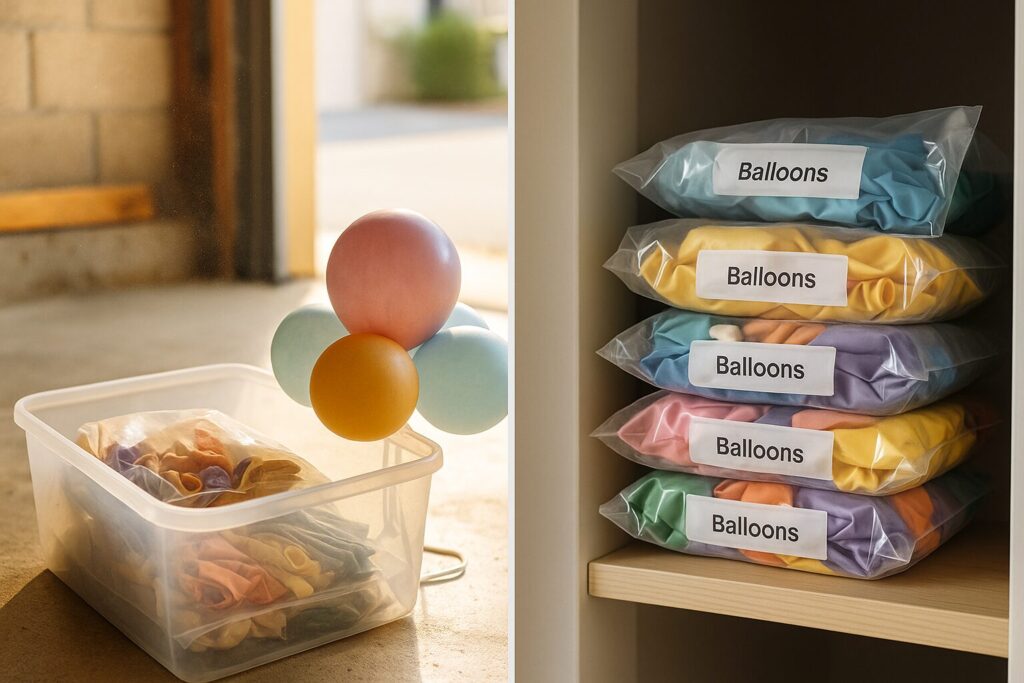
Heat, humidity, and sunlight all weaken latex. Even balloons sitting in a clear plastic bin in your garage can start aging from the warmth alone.
Quick Summary:
Where and how you store balloons affects how long they hold their shape.
What’s Really Happening:
Latex breaks down with exposure to heat or UV light. Even small amounts make the pores slightly larger. Larger pores mean faster air loss. Faster air loss means sagging centerpieces.
If you’ve ever opened a bag of balloons and noticed a rubbery smell or a powdery texture, those balloons have already started aging. They’re still usable, just not for anything that needs to last for half a day.
What You Can Do:
- Store balloons in a cool, dry cabinet.
- Keep unused balloons in their original bags to protect them from dust and light.
- Use darker colors for longer-lasting centerpieces outdoors since they tend to handle UV exposure slightly better.
Avoid These Common Mistakes:
- Leaving inflated balloons sitting near a window before the party.
- Using old balloons for anything structural. Save those for quick balloon animals at home where nobody minds a droopy tail.
Little Helpers That Keep Centerpieces Standing Tall
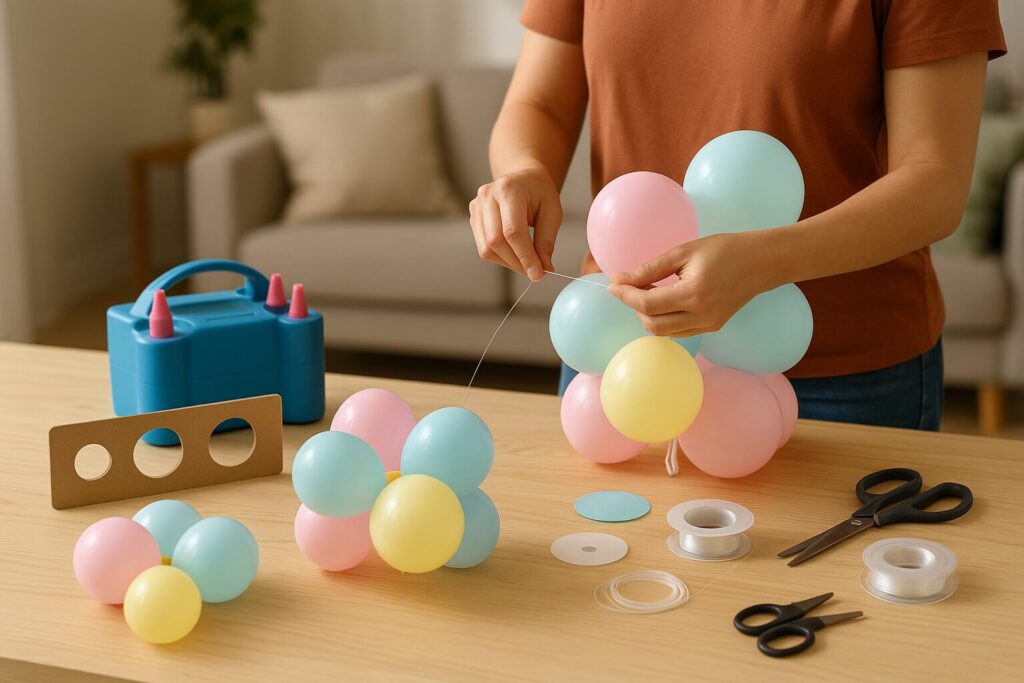
You don’t need fancy balloon equipment to fight sinking, but a couple of small tools make a noticeable difference.
Electric air pump:
An electric pump reduces the heat and friction from hand-pumping, which keeps the latex stronger. I like ones with dual nozzles so you can inflate two balloons at once for matching sizes.
Balloon sizing box or discs:
These keep your balloons evenly sized so they lose air at roughly the same rate. When balloons start even, they slump evenly, which means your design still looks intentional hours later.
Fishing line or balloon tape:
Sometimes sinking isn’t caused by air loss but by the stack loosening. Fishing line can create gentle upward tension that holds everything in place.
Troubleshooting Guide
The Simple Version:
Balloons sink because they slowly lose air and react to temperature changes.
Signs to Watch For:
- Balloon feels softer than when you tied it
- Centerpiece looks shorter than before
- Foil toppers or accents start leaning
- Balloons look slightly wrinkled around the neck
Quick Fixes for Today:
- Gently squeeze air back into position by rolling the balloon between your hands
- Add a touch of upward tension using ribbon or fishing line
- Move the centerpiece to a warmer spot to regain a little size
Better Fixes for Next Time:
- Inflate closer to party time
- Double-stuff balloons for longer events
- Match your inflation environment to your event space
- Use high-quality balloons for any structure that has to stay upright for more than three hours
Conclusion
Once you understand that balloons naturally soften and shrink over time, the sinking makes a lot more sense. More importantly, you can predict it and adjust your setup so your decorations keep looking fresh through cake cutting, photos, and every guest who says, “Who made these? They’re adorable.”
Balloon decorating becomes so much calmer when you understand the “why,” and I hope this helped lift a little confusion for you.